About
The origins of our style
The roots of traditional Japanese karate trace back to the island of Okinawa. In the 16th and 17th centuries, this martial art found its way to Okinawa from China through the efforts of soldiers and merchants.
Okinawa
A thousand years of lineage
With a rich history spanning over 1000 years in China, martial arts were ingrained deeply into the cultural fabric of the region. Initially known as CHIN-TE by the Okinawans, which translates to ‘Chinese or foreign fist’, karate underwent significant evolution on the island.
During the 19th century, Okinawa was characterized by small villages, each with its own karate master boasting a distinctive style. Typically, these masters imparted their knowledge to a single student in private settings. The karate practiced during this period was rigorous and unforgiving. Training focused on developing techniques of such potency that a single punch or kick could incapacitate an opponent. For both the master and students, it was a matter of life and death, reflecting the intensity and seriousness with which karate was approached.
The founder
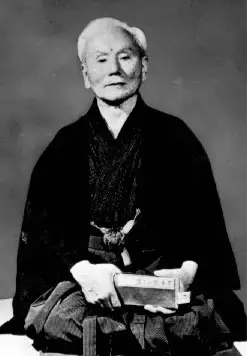
Gichin Funakoshi, Sensei
Gichin Funakoshi is revered as the founder of Shotokan karate. Born on November 10, 1868, and passing away on April 26, 1957, his journey in martial arts was shaped by unique circumstances and unwavering determination. Sensei Funakoshi had the rare opportunity to learn from two different Okinawan karate masters, a testament to his commitment to mastering his craft.
His resilience and strength of character were legendary; it is said that he once braved a hurricane, standing firm against the wind, as a personal test of fortitude.
In 1922, Master Funakoshi received an invitation to demonstrate his karate skills in Japan. His presentation was met with resounding success, leading him to decide to stay in Japan for the remainder of his life, dedicating himself to the promotion and advancement of karate.
Sensei Funakoshi was not only a martial artist but also a poet, known by the pen name SHOTO, meaning ‘waving pines’.
The term KAN translates to ‘house’. In homage to his poetic identity, Master Funakoshi’s students affectionately labeled his dojo as “Shotokan” – the House of Shoto.
Philosophy
The philosophy of empty hands
Master Funakoshi redefined ‘Karate’, moving it from strictly combat to a profound path of character development, reflecting three layers of understanding:
The Surface
Refers strictly to combat without weapons, denoting 'empty hands'—the practical, physical application of technique.
The Character
Speaks to the internal journey, emphasizing the importance of having a heart and mind devoid of malevolent intentions. For Master Funakoshi, the ultimate goal was to ‘seek perfection of character’.
The Profound
Drawn from deep Buddhist philosophy, this reflects the understanding that all things are transient and devoid of inherent, fixed existence. Karate is a practice of constant, conscious change.
Shotokan Karate-Do International Federation
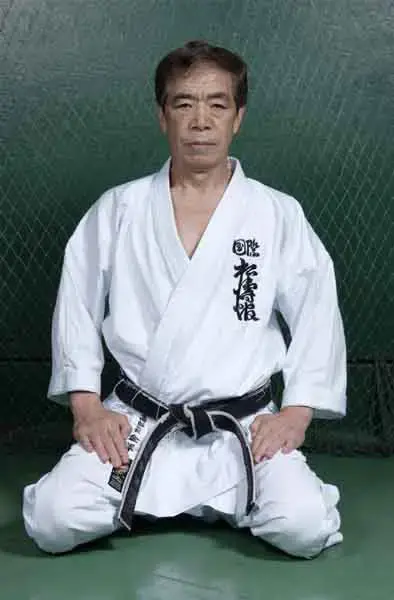
Hirokazu Kanazawa, Soke
May 3, 1931 – December 8, 2019
Hirokazu Kanazawa, Soke was born 3 May 1931. He trained in judo while he was in high school, achieving a second-degree black belt (second dan). While at college he saw a group of karate students training and became entirely devoted to this new martial art.
Soke Kanazawa was already a member of the judo club, but he made persistent efforts to join the karate club. An exception was made, and he was accepted, but found himself at a disadvantage: his class had been training for a period and he found himself behind. To catch up, he would sometimes train from midnight to 2 AM. Master Kanazawa was granted his first dan after only a year and a half of training.
He graduated from college in 1956 with a degree in commerce, but immediately joined the karate organization. He won the first All Japan Karate Championship in free sparring (kumite) in 1957. He had not intended to compete because he had broken his right hand. However, he found that his mother had traveled to Tokyo to see him compete. And compete he did, with a bandaged right hand and was attended by a physician between each bout. He won each match convincingly.
In 1977 Soke Kanazawa founded the Shotokan Karate-Do International Federation (SKIF). He spent the rest of his life promoting his philosophy, his karate, and his organization.
The International Martial Arts Federation promoted Soke Kanazawa to 10th Dan in 2000. There is no higher rank. Soke Kanazawa passed away on December 8, 2019.
Our foundation
SKIF-USA leadership
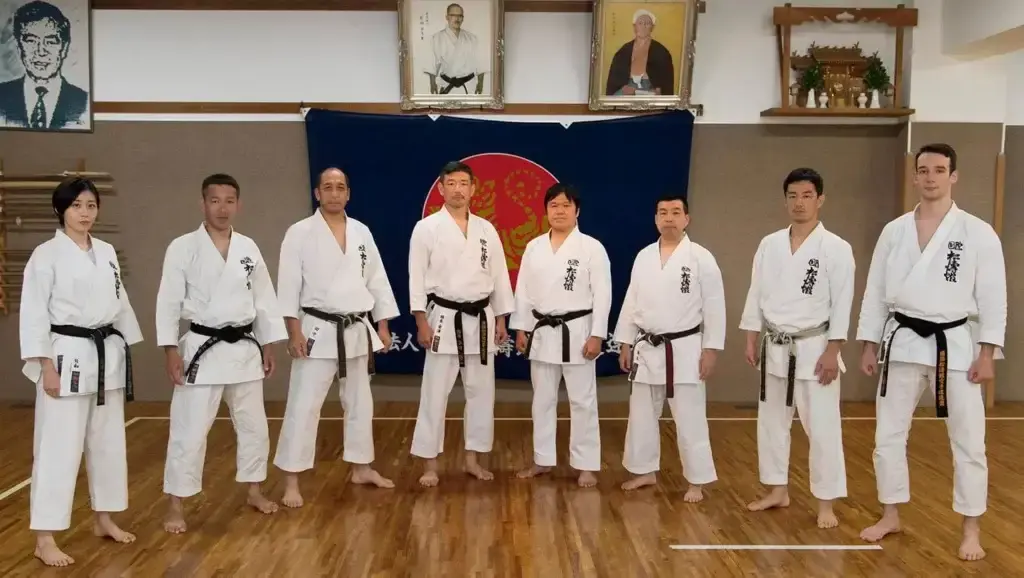
Dedicated instructors carrying forward the strict standards and inclusive philosophy established by Soke Kanazawa. Doshinkai Dojo is proudly affiliated with the SKIF-USA and SKIF Japan organizations.
Explore our network